
Cleaning Products That Damage Rental Surfaces: What Not to Use Before Check-Out
At the end of a tenancy, it is tempting to reach for the strongest product in the cupboard and scrub. But some of the worst deposit deductions are not for dirt at all; they are for damage caused while cleaning. Bleach on a carpet, acid on a marble hearth, an abrasive pad on a glass hob or a magic eraser on painted walls can leave permanent marks. Dirt can be cleaned. Damage has to be repaired or replaced, and the cost is far higher. This guide explains which products to avoid on each common rental surface, and what to use instead.
Why Damage Costs More Than Dirt
If a property is dirty at check-out, the landlord can claim a reasonable cost for cleaning. If something is damaged, the landlord can claim for repair or replacement, taking into account the age and condition of the item. A stained carpet may cost a little to clean; a bleached carpet may need replacing.
So the first rule of end of tenancy cleaning is simple: if in doubt, use the mildest product that works, and test it on a hidden area first.
Bleach
Bleach is good at whitening and disinfecting, but it is not a degreaser, and it does not remove limescale. It is also one of the most common causes of cleaning damage.
Avoid bleach on:
- Carpets and rugs: it removes colour permanently, leaving pale patches
- Coloured fabrics and upholstery: same problem
- Coloured grout: it can lighten and patch it
- Stainless steel: it can cause pitting and discolouration over time
- Wooden surfaces and worktops: it can bleach and roughen the wood
- Natural stone: it can etch and discolour
Never mix bleach with other cleaners, especially acidic limescale removers, vinegar or ammonia. The fumes can be dangerous. If you use bleach in a toilet, rinse well before using any other product.
Acidic Descalers and Vinegar
Acids dissolve limescale, which is why they work so well on taps and showers in Oxfordshire's hard-water areas. But they also dissolve other things.
Avoid acids on:
- Marble, limestone, travertine and other natural stone: acid etches the surface, leaving dull marks that cannot be cleaned off
- Marble fireplaces and hearths, common in period homes in North Oxford and Jericho
- Some tap finishes: brushed, brass, gold-effect and black taps can be damaged
- Cement-based grout: repeated use can erode it
- Enamel: strong acids can dull old enamel baths
Use a pH-neutral cleaner on stone, and the mildest descaler that works on plated taps. Rinse well and dry.
Abrasive Pads and Scouring Powders
Scouring pads, steel wool and abrasive powders remove baked-on dirt, but they also remove the surface.
Avoid abrasives on:
- Glass and ceramic hobs: they scratch, and scratches are permanent. Use a hob scraper and a cream cleaner designed for glass hobs.
- Stainless steel: scratches against the grain are very visible
- Glossy kitchen units: they leave dull patches
- Shower screens and mirrors: they scratch the glass
- Acrylic baths and shower trays: they scratch easily
- Enamel: fine scratches trap dirt and stain more easily
Use non-scratch pads, microfibre cloths and cream cleaners instead.
Magic Erasers on Painted Walls
Melamine sponges, often sold as "magic erasers", are very effective at removing marks. They work because they are a fine abrasive. On matt or emulsion paint, they can remove the paint finish along with the mark, leaving a shiny or pale patch that looks worse than the original mark.
Test on a hidden area first. Use them gently, with water only, and stop if the finish changes. For most marks on walls, a soft cloth with warm water and a little washing-up liquid is safer. Our guide to cleaning walls and ceiling marks explains more.
Oven Cleaners
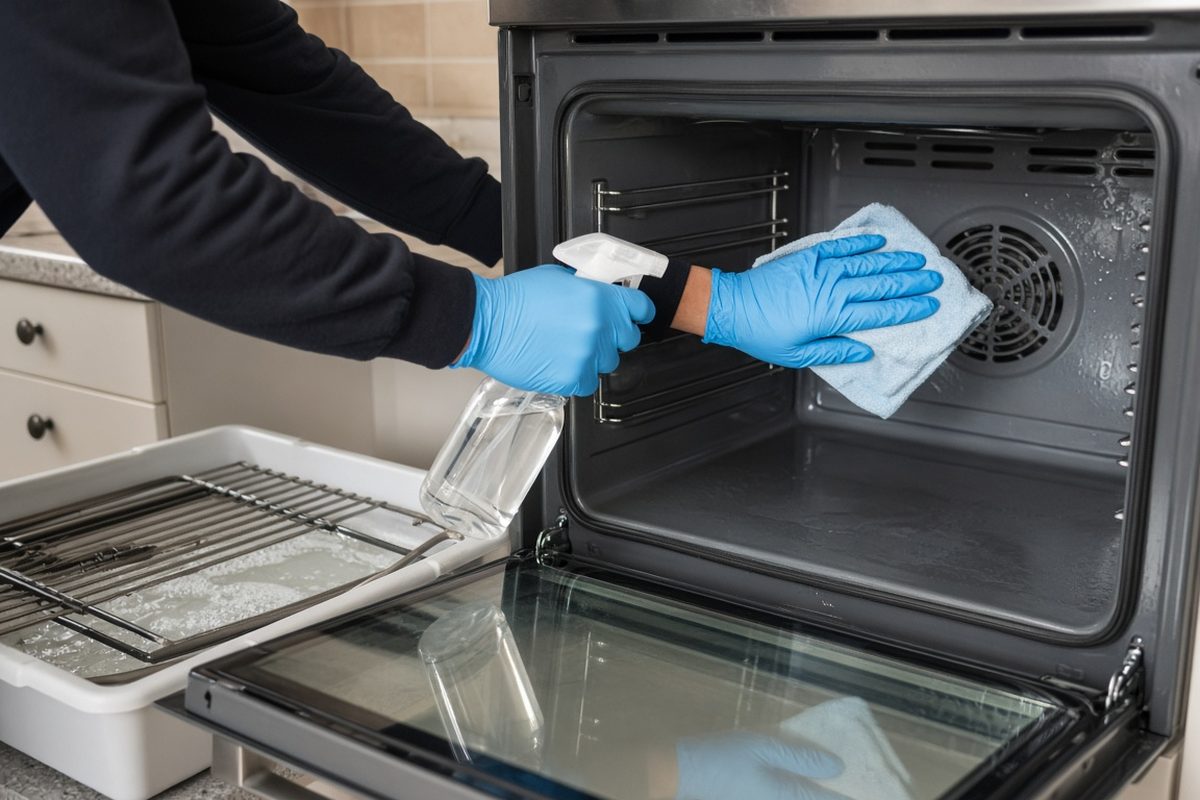
Heavy-duty oven cleaners are very effective, but they are caustic.
Be careful with:
- Self-cleaning (pyrolytic) and catalytic oven liners: many oven cleaners damage these. Check the manual.
- Aluminium: caustic products discolour it
- The outside of the oven and nearby surfaces: keep oven cleaner off paint, worktops, flooring and rubber seals
- Skin and eyes: always wear gloves and follow the label
Our guide on how to clean an oven before moving out gives a safe method.
Products on Wood and Laminate Floors
Wooden floors, laminate and luxury vinyl tiles are common in rentals. They are easily damaged by too much water and the wrong products.
Avoid:
- Steam mops on wood, laminate and many vinyl floors: steam can cause swelling, lifting and loss of finish
- Soaking wet mops: water seeps into joints and causes swelling
- Bleach and strong acids
- Oil soaps and polishes on laminate: they leave a slippery film
- Abrasive powders
Use a well-wrung microfibre mop with a cleaner designed for the floor type. See our guide to laminate, wood and vinyl floors.
Carpets and Upholstery
Apart from bleach, common causes of carpet and upholstery damage are:
- Too much water: shrinkage, browning and odours
- Rubbing stains: spreads the stain and damages the pile
- Strong solvents: can dissolve backing and dyes
- Wrong products on wool: some stain removers damage wool fibres
Blot stains, do not rub, and test any product first. Our guide to stain removal explains what usually comes out.
Worktops
Different worktops need different products:
| Worktop | Avoid | Use |
|---|---|---|
| Laminate | Abrasives, very hot pans | Mild detergent, non-scratch cloth |
| Solid wood | Bleach, soaking, abrasives | Mild detergent, then oil if needed |
| Granite and quartz | Acids, bleach, abrasives | pH-neutral stone cleaner |
| Marble | Acids, vinegar, lemon | pH-neutral stone cleaner |
| Stainless steel | Bleach, abrasives | Stainless steel cleaner, wipe with the grain |
Appliances and Their Finishes
Appliances are expensive to replace, and their surfaces are easy to damage:
- Stainless steel fridges and dishwashers: use a stainless steel cleaner or warm soapy water, wiping with the grain. Avoid bleach, scouring cream and chlorine-based sprays, which cause pitting and spotting.
- Glossy appliance doors: microfibre and a mild detergent only. Abrasives leave visible dull patches.
- Microwave interiors: steam a bowl of water with lemon to loosen splashes, then wipe. Do not use oven cleaner inside a microwave.
- Washing machine seals: a mild detergent and a soft cloth. Bleach can perish the rubber over time.
- Extractor hoods: degreaser on the outside only if the finish allows; many brushed steel hoods mark easily. Filters can usually go in a dishwasher or be soaked.
- Induction and ceramic hobs: a hob scraper and dedicated cream, never a scouring pad.
Windows, Frames and Sills
Glass is tough, but its surroundings are not:
- uPVC frames: warm soapy water. Solvents and abrasives can yellow and roughen the plastic.
- Painted timber frames and sash windows: mild detergent, no soaking. Water left in joints can damage old timber.
- Rubber seals: gentle cleaning only; strong products can perish them.
- Window film or tinted glass: avoid ammonia-based glass cleaners, which can damage some films.
Our guide to window sills, tracks and frames explains how to clean each part safely.
Mixing Products
Mixing cleaning products is dangerous as well as damaging. Bleach mixed with acids (including many limescale removers and vinegar) releases chlorine gas; bleach mixed with ammonia releases chloramine fumes. Both can cause serious breathing problems. Use one product at a time, rinse between them, and keep windows open. The HSE COSHH pages explain why professional cleaners assess every product they use.
Safe Basic Kit
For most end of tenancy cleans, you need:
- Washing-up liquid and warm water, for most surfaces
- A limescale remover, for taps, showers and toilets (not stone)
- An oven cleaner suitable for your oven type
- A cream cleaner, for baths, sinks and hobs
- A glass cleaner
- A pH-neutral floor cleaner
- Microfibre cloths and a non-scratch pad
- Gloves
Store products safely, especially if you have children or pets. Our guide to safe cleaning products for children and pets has more advice.
When to Get Professional Help
If you are not sure what a surface is made of, or how to clean it, it may be worth asking a professional. Professional cleaners know which products to use on which surfaces, and carry a range of products so they do not have to use one strong product on everything. Our end of tenancy cleaning checklist explains how we approach each room.
Frequently Asked Questions
Can I be charged for damage caused while cleaning?
Yes. If you damage something while cleaning, such as bleaching a carpet or scratching a hob, the landlord can claim for repair or replacement, taking into account the item's age and condition.
Is vinegar safe to use everywhere?
No. Vinegar is acidic and can etch natural stone, damage some tap finishes and erode grout. Use it only on suitable surfaces.
Can I use a magic eraser on walls?
Test it on a hidden area first. On many matt paints, it removes the finish and leaves a visible patch.
Can I use a steam mop on laminate floors?
Most laminate manufacturers advise against steam mops, because steam can cause swelling and lifting.
What should I do if I damage something while cleaning?
Stop, take photos, and tell your landlord or agent honestly. Trying to hide damage usually makes things worse.