
Safe Cleaning Products for Homes With Children and Pets: What to Use and What to Avoid
Cleaning a home properly while keeping children and pets safe can feel like a balancing act. Strong products cut through grease and limescale, but many are harmful if swallowed, splashed in eyes or breathed in. Babies crawl on floors, toddlers put everything in their mouths, cats lick their paws and dogs drink from anywhere. This guide explains which common cleaning products need the most care, safer alternatives for everyday cleaning, how to store and use products safely, and what to ask a professional cleaner if you have children or pets at home.
Why It Matters
Household cleaning products are a common cause of accidental poisoning in young children in the UK. Children are at risk because they explore with their hands and mouths, are closer to the floor and are smaller, so a small amount of a product can have a bigger effect. Pets face similar risks: they walk on freshly cleaned floors, groom themselves and may drink from toilets or buckets.
Most incidents happen when products are in use or have just been used, or are stored within reach. A few simple habits make a big difference.
Products That Need the Most Care
Some products are more hazardous than others. Take particular care with:
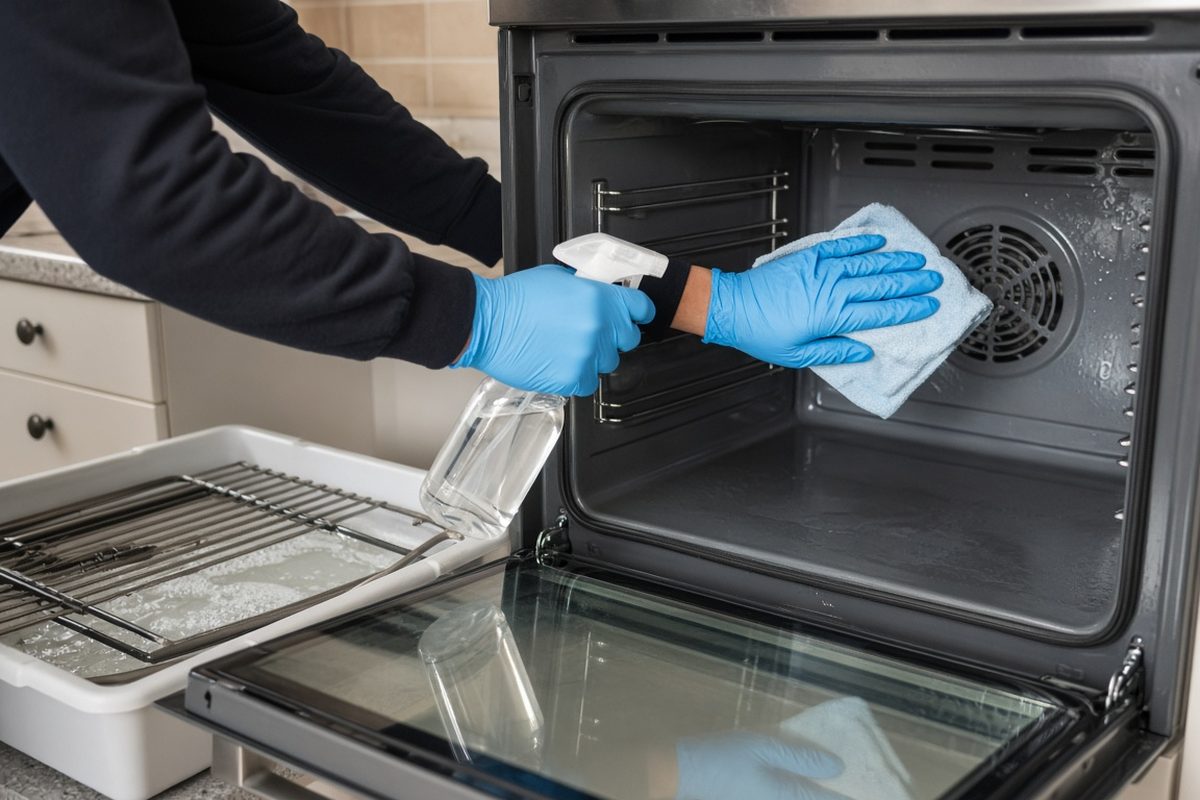
- Oven cleaners: often strongly alkaline and corrosive to skin and eyes. Fumes can irritate the lungs.
- Drain unblockers: among the most corrosive household products.
- Bleach and chlorine-based products: irritating to skin, eyes and lungs, and dangerous if mixed with other products.
- Limescale removers and toilet cleaners: often acidic; can burn skin and eyes.
- Dishwasher and laundry tablets or pods: brightly coloured and attractive to children, and harmful if bitten or swallowed.
- Air fresheners, plug-ins and strong fragrances: some can irritate airways in people and pets, especially birds and small animals.
- Essential oils: some, such as tea tree, can be toxic to cats and dogs.
- Disinfectants containing phenols: particularly harmful to cats.
Always read the label. Hazard symbols and safety statements tell you how harmful a product is and what precautions to take.
Never Mix Products
Mixing cleaning products can release dangerous gases:
- Bleach and acid (including limescale removers and vinegar) release chlorine gas
- Bleach and ammonia release chloramine fumes
- Bleach and some toilet cleaners can react violently
Use one product at a time, rinse between products and keep windows open. This matters even more when children or pets are in the home, as they are more sensitive to fumes. The HSE COSHH guidance explains why professional cleaners assess every product they use.
Safer Everyday Choices
For most day-to-day cleaning, you do not need strong chemicals:
- Warm water and washing-up liquid cleans most surfaces, including worktops, tables, floors and paintwork
- Microfibre cloths lift dirt and grease with little or no product
- Steam cleaners can clean some hard surfaces without chemicals, though they are not suitable for every floor
- Bicarbonate of soda paste is a mild abrasive for sinks, hobs and grout, checking first that it is suitable for the surface
- Products labelled for use around children and pets, following the label
"Natural" or "eco" does not always mean safe. Vinegar is acidic and can damage stone; some essential oils are harmful to pets. Judge each product by its label, not its marketing.
Using Products Safely
When cleaning with children or pets in the home:
- Keep them out of the room while you clean and until surfaces are dry
- Ventilate by opening windows and using extractor fans
- Use the minimum amount of product needed
- Rinse surfaces that children or pets may touch or lick, such as floors, high chairs and pet bowl areas
- Never leave a bucket of cleaning solution unattended, as young children can drown in small amounts of water
- Put products away immediately after use, not on the side
- Close toilet lids after using toilet cleaner, so pets do not drink from the bowl
- Wash your hands after cleaning
Storing Products Safely
- Keep products in their original containers, with labels intact
- Store them high up, ideally in a locked cupboard, not under the sink
- Fit child safety locks on cupboards that hold products
- Keep laundry and dishwasher pods in their closed containers, out of reach
- Do not decant products into drinks bottles or food containers
- Keep pet products separate from cleaning products
In a rented home, ask your landlord before fitting locks or catches that need screws. Adhesive catches can usually be removed without damage.
If an Accident Happens
If a child or pet swallows a cleaning product, or gets it in their eyes or on their skin:
- Do not make them sick
- Rinse eyes or skin with plenty of water
- Keep the product container to show the medical professional
- For a child, call NHS 111 or, in an emergency, 999. The NHS guidance on poisoning explains what to do.
- For a pet, call your vet straight away
End of Tenancy Cleaning With Children and Pets
An end of tenancy clean uses stronger products than everyday cleaning, especially for ovens, limescale and grease. If you are still living in the property during the clean, or moving out with children or pets on the same day:
- Arrange for children and pets to be out of the property during the clean, or in a separate room away from the cleaning
- Ask the cleaners which products they will use, especially for the oven
- Ventilate well during and after
- Keep pets away from freshly cleaned floors until they are dry
Our guide to whether you can be home during the clean has more tips.
Moving Into a Home With Children or Pets
When you move into a new rental, a pre-tenancy clean helps make sure the home is clean and safe from the start. It is a good opportunity to:
- Clean floors, skirting boards and low surfaces thoroughly
- Remove any residue from previous tenants' products
- Check for anything harmful left behind, such as old pest bait or chemicals in cupboards
- Clean carpets, especially if the previous tenants had pets
Our move-in and pre-tenancy cleaning service and our guide to cleaning before moving into a new home explain more.
Pet Hair, Smells and Stains
If you have pets in a rented home, the end of the tenancy needs extra attention:
- Pet hair gets into carpets, upholstery, skirting boards and vents. Vacuum thoroughly with a pet hair attachment.
- Smells can linger in carpets and soft furnishings. Professional carpet and upholstery cleaning can help. See our guide to getting rid of smells before moving out.
- Stains from pet accidents should be treated with an enzyme cleaner, which breaks down the source of the smell. Avoid ammonia-based products, which can smell like urine to pets and encourage them to go again.
- Flea treatment may be required by your tenancy if you had pets. Check your agreement.
Our end of tenancy carpet cleaning and upholstery and sofa cleaning services handle pet hair and smells.
What to Ask a Professional Cleaner
If you have children or pets, ask your cleaner:
- Which products do you use, and are any particularly hazardous?
- Can you use milder products in certain rooms?
- How long should children and pets stay out after cleaning?
- Do you take all your products away at the end?
- Do you rinse floors after cleaning?
A good cleaner will be happy to answer and will never leave products in the property. Our team stores products in sealed carry boxes and takes everything away when the job is done.
Frequently Asked Questions
Is bleach safe to use around children?
Bleach can be used safely if you follow the label, ventilate, keep children away until surfaces are dry and rinsed, and store it out of reach. Never mix it with other products.
Are natural cleaning products always safe for pets?
No. Some natural products, such as certain essential oils, are harmful to pets. Always check the label and, if in doubt, ask your vet.
How long should pets stay off a freshly cleaned floor?
Until the floor is completely dry, and ideally after it has been rinsed with clean water if a strong product was used.
What should I do if my child swallows a cleaning product?
Do not make them sick. Call NHS 111 for advice, or 999 in an emergency, and keep the product container.
Can you clean my home with milder products because I have a baby?
Yes. Tell us when you book, and we will discuss which products to use and how to ventilate and rinse.