
Getting Rid of Smells Before Moving Out: Cooking, Pets, Smoke, Drains and Musty Rooms
A property can look spotless and still smell. Cooking smells soak into fabrics and cupboards, pet smells settle into carpets, smoke clings to walls and curtains, drains release odours when traps dry out, and closed-up rooms develop a musty, stale air. Inventory clerks notice smells as soon as they open the front door, and some note them in the check-out report. This guide explains how to find the source of a smell, how to remove it rather than mask it, and how to leave a rented home fresh for the next tenant.
Find the Source First
Air fresheners and scented candles only mask smells for a short time. To get rid of a smell, you need to find and remove its source. Walk through the property and sniff:
- In each room, near the floor and near the ceiling
- Inside cupboards and wardrobes
- Near drains, plugholes and toilets
- Near the fridge, freezer and bins
- In soft furnishings: carpets, curtains, sofas and mattresses
- In corners and behind furniture
The strongest point is usually close to the source.
Ventilate
Fresh air is the simplest and most effective way to reduce most smells. In the days before you move out:
- Open windows on opposite sides of the property to create a through draught
- Leave internal doors open
- Open cupboard and wardrobe doors
- Run extractor fans in the kitchen and bathroom
- Keep the heating on low in cold weather, so surfaces stay dry
Ventilation alone will not remove smells trapped in fabrics or caused by an ongoing source, but it helps everything else work.
Cooking Smells
Cooking smells, especially from frying, spices, fish and curry, settle into grease on surfaces and into fabrics.
- Degrease the kitchen: the hob, extractor hood and filters, splashbacks, tiles, cupboard doors and tops. Grease holds smells. See our guide to extractor fan and cooker hood cleaning.
- Clean the oven thoroughly, including racks and the door. Burnt food in the oven smells when heated.
- Clean the microwave: heat a bowl of water with lemon for a few minutes, then wipe out.
- Wash fabrics: curtains, blinds, cushion covers and tea towels.
- Clean walls in the kitchen, which can hold grease and smells.
Fridges and Freezers
A fridge that has been switched off with the door closed develops a strong smell quickly.
- Empty, switch off and defrost.
- Remove shelves and drawers and wash them in warm soapy water.
- Wipe the inside with warm water and bicarbonate of soda (about a tablespoon per litre).
- Clean the door seals carefully, as food collects in the folds.
- Dry and leave the door open.
- If a smell remains, place an open bowl of bicarbonate of soda inside overnight.
See our guide to defrosting and cleaning the fridge freezer.
Bins
Kitchen bins and wheelie bins often smell.
- Empty and wash kitchen bins with hot soapy water and a little disinfectant
- Dry thoroughly before putting a new liner in
- Rinse wheelie bins, if your tenancy requires it, and leave them upside down to dry
- Clean the floor and cupboard where the bin stood
Drains and Plugholes
Smells from sinks, showers and baths are often caused by:
- Hair and soap build-up in plugholes and traps
- Food and grease in kitchen sinks
- Dry traps in rarely used sinks, showers and toilets, which let drain air in
To deal with them:
- Remove hair and debris from plugholes with gloves or a drain tool.
- Pour boiling water down kitchen sinks to melt grease (not into plastic pipework that may be damaged, and not into toilets).
- Use a drain cleaner designed for the purpose, following the label. Do not mix drain cleaners with other products.
- Run water in every outlet, including rarely used ones, to refill the traps.
- Clean overflows in basins and baths with a bottle brush.
If a drain smell persists, or water drains slowly, report it to the landlord. It may be a blockage or a problem with the drains.
Toilets
Clean the toilet thoroughly, including under the rim, the seat hinges, the base and behind the pedestal. Urine splashes on the floor and the wall behind the toilet are a common source of bathroom smells. Clean the floor and the bottom of the wall with a suitable cleaner.
Washing Machines and Dishwashers
Both can develop smells from trapped food, detergent and water.
- Washing machine: clean the detergent drawer, the door seal (including inside the folds) and the filter. Run a hot empty cycle with a washing machine cleaner. Leave the door open to dry.
- Dishwasher: clean the filter, wipe the seals and run a hot empty cycle with a dishwasher cleaner.
Pet Smells
Pet smells come from hair, dander, accidents and bedding.
- Vacuum thoroughly, including carpets, upholstery, skirting boards and vents, using a pet hair attachment
- Treat accident spots with an enzyme cleaner, which breaks down the source of the smell. Avoid ammonia-based products.
- Clean hard floors where pets ate or slept
- Wash or remove pet bedding and blankets
- Clean carpets and upholstery professionally if needed
If urine has soaked into the underlay, surface cleaning may not remove the smell. The underlay may need replacing. Our end of tenancy carpet cleaning and upholstery and sofa cleaning services use enzyme treatments for pet smells.
Smoke Smells
If someone has smoked indoors, smoke residue clings to walls, ceilings, fabrics and soft furnishings.
- Wash walls and ceilings with warm water and a degreaser suitable for paint
- Clean windows, frames and sills, which hold a sticky film
- Wash curtains and blinds, or have them cleaned
- Clean carpets and upholstery professionally
- Clean light fittings and lampshades
- Ventilate for several days
If smoking was not allowed under the tenancy, the landlord may claim for cleaning and, in some cases, redecoration. Heavy nicotine staining usually needs stain-blocking paint, which is redecoration rather than cleaning.
Musty Smells
A musty smell usually means something is damp. Common causes:
- Condensation on cold walls and windows
- Damp clothes or towels left in cupboards
- A slow leak under a sink, behind a washing machine or from a pipe
- Wet carpets or underlay
- Poor ventilation in a closed-up room or cupboard
To deal with it:
- Find and remove the source: damp items, wet carpet, or a leak
- Ventilate and heat the property to dry it out
- Clean any black spotting on walls, frames and in cupboards
- Clean carpets once dry
If there is a leak or a building damp problem, report it to the landlord. See our guides to condensation and black spots on windows and cleaning after a leak or water damage.
Carpets and Soft Furnishings
Carpets, rugs, curtains, sofas and mattresses absorb smells from cooking, pets, smoke and damp. A thorough vacuum helps, but deep smells usually need a professional clean.
- Sprinkle bicarbonate of soda on carpets and upholstery, leave for a few hours, then vacuum. This absorbs mild smells.
- Wash curtains and removable covers according to their labels.
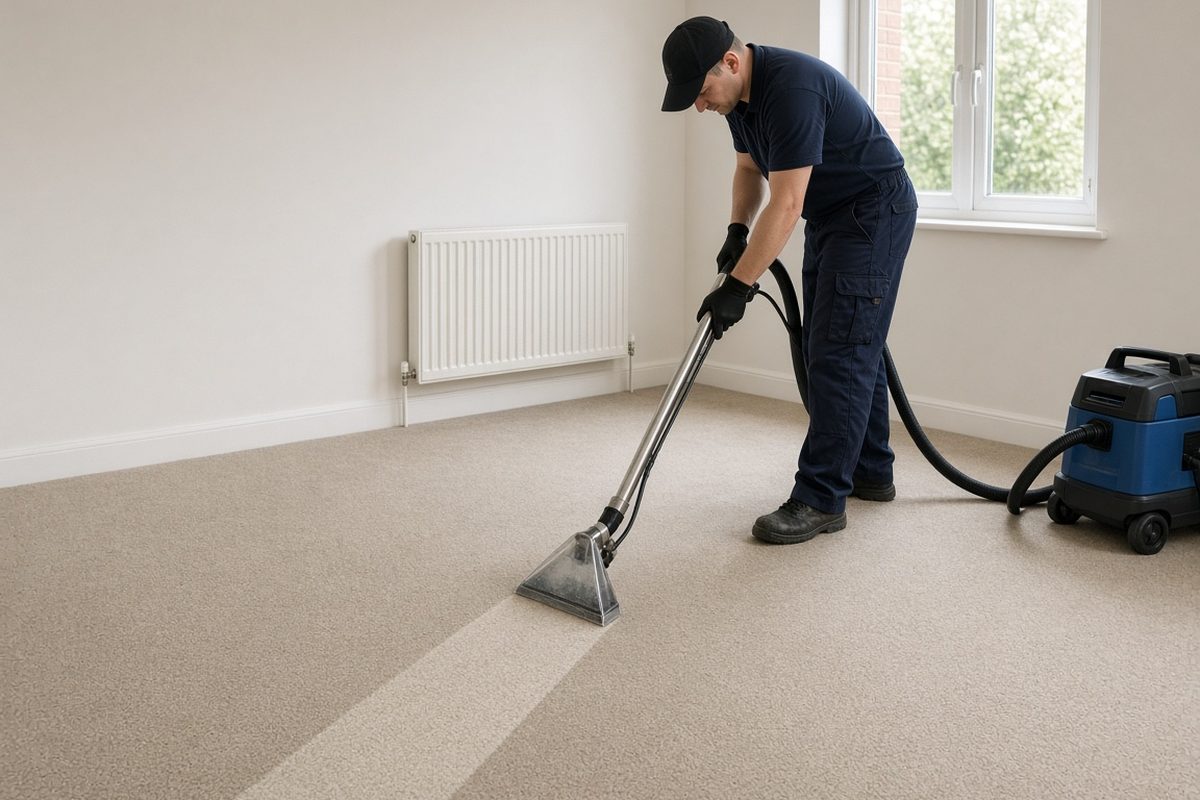
- Professional hot water extraction removes much deeper soiling and smells from carpets.
Wardrobes and Cupboards
Closed cupboards develop stale smells. Clean inside with a mild cleaner, leave doors open and place a bowl of bicarbonate of soda inside overnight. See our guide to wardrobes and cupboards at the end of a tenancy.
Empty Properties
If the property has been empty for a while, smells can come from dry drain traps, a closed fridge or stale air. Run water in every outlet, ventilate and clean. See our guide to cleaning a rental left empty in winter.
What Not to Do
- Do not rely on air fresheners, plug-ins or scented candles to hide a smell. Clerks often notice heavy fragrance, and it does not remove the cause.
- Do not mix cleaning products to make them stronger. Bleach mixed with acids or ammonia produces dangerous gases.
- Do not use ozone generators without professional training. They can be harmful to health and damage materials.
- Do not paint over smells or stains without the landlord's permission.
Natural Odour Absorbers
Some simple products can help absorb mild smells after cleaning:
- Bicarbonate of soda, in open bowls or sprinkled on carpets and then vacuumed
- Activated charcoal bags in cupboards and wardrobes
- Fresh air and sunlight
They work best once the source has been removed.
Professional Help
Our end of tenancy clean includes degreasing the kitchen, cleaning appliances, bathrooms, drains and plugholes, bins and all surfaces. Carpet and upholstery cleaning can be added for deeper smells. See our end of tenancy cleaning checklist and end of tenancy cleaning prices.
Smells in Oxford Homes
Some smells are especially common in Oxford rentals:
- Student house kitchens: with several people cooking every day, grease and food smells build up in extractors, ovens, bins and fridges. Shared fridges often contain forgotten food at the end of the year.
- Period terraces: older houses with suspended timber floors, cellars or solid walls can have a damp, musty smell, especially in winter or after a long empty period.
- Flats near the river: homes in Osney, Grandpont and New Hinksey can be damper and need more ventilation.
- Bike stores and hallways: wet bikes, shoes and coats in narrow hallways leave a damp smell if the space is not aired.
A Two-Day Plan
If you have smells to deal with before a check-out, give yourself two days:
Day one: ventilate the whole property; empty and clean the fridge, freezer and bins; clean drains and plugholes and run water in every outlet; wash curtains, covers and any fabrics; sprinkle bicarbonate of soda on carpets.
Day two: vacuum carpets and upholstery thoroughly; degrease the kitchen; clean the oven, microwave, washing machine and dishwasher; clean the bathroom and toilet, including behind the toilet; check cupboards and wardrobes; ventilate again before you leave.
If the smell is still there, find out where it is coming from before the check-out, and book carpet or upholstery cleaning if needed.
Frequently Asked Questions
Can I be charged for smells in the property?
If a smell is caused by something you are responsible for, such as pets, smoking or poor cleaning, and it was not there at check-in, the landlord may claim a reasonable cost for cleaning it.
How do I get rid of a smell in the fridge?
Clean it thoroughly with warm water and bicarbonate of soda, clean the seals, dry it and leave the door open. A bowl of bicarbonate of soda overnight helps.
Why does my bathroom smell of drains?
Usually hair and soap in the plughole, or a dry trap in a rarely used outlet. Clean the plughole and run water. If the smell persists, report it.
Will carpet cleaning remove pet smells?
Professional cleaning with enzyme treatment removes most pet smells. If urine has soaked into the underlay, it may not be fully removed.
Should I use air fresheners before the check-out?
It is better not to rely on them. Remove the source of the smell and ventilate.