
Cleaning Laminate, Wood and Vinyl Floors: How to Clean Without Damage Before Check-Out
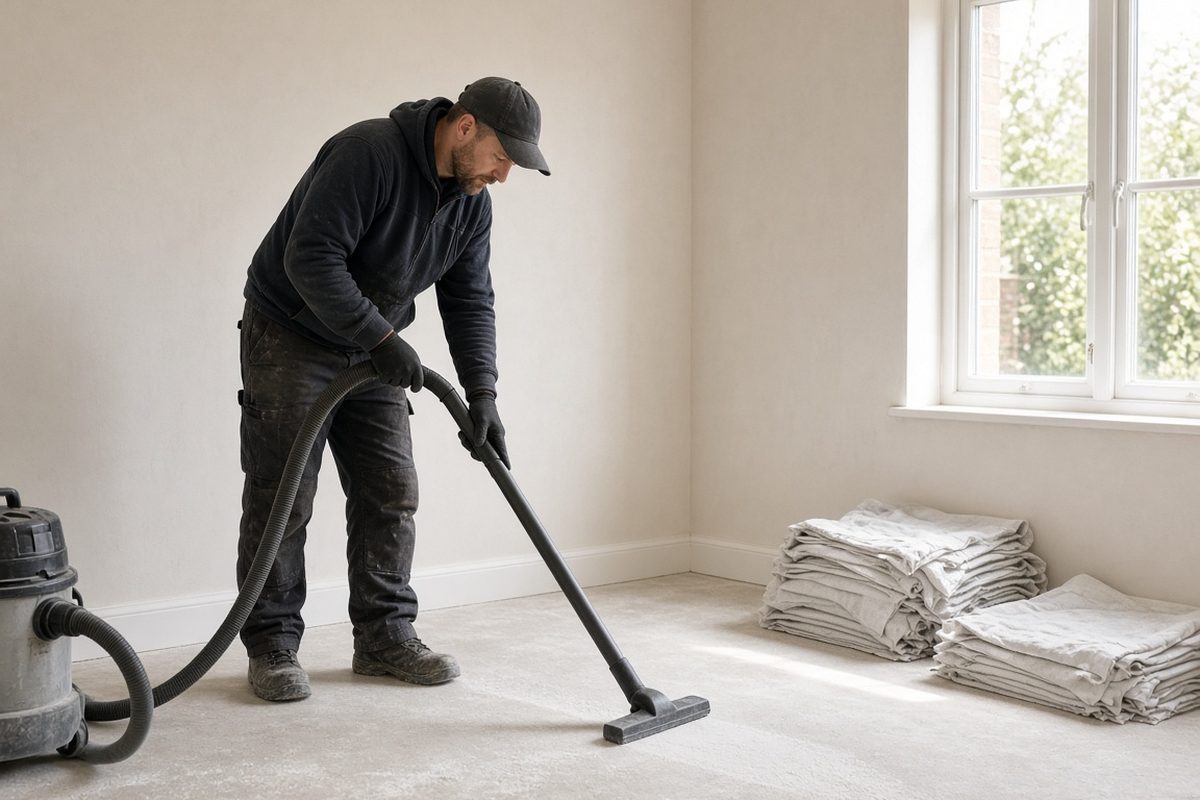
Hard floors are increasingly common in Oxford rentals: laminate in student houses, engineered wood in professional lets, luxury vinyl tiles in new-builds and original floorboards in period flats. They are practical and easy to keep clean day to day, but the wrong cleaning method can cause lasting damage. Too much water can make laminate swell, steam can lift the finish on wood, and harsh products can dull vinyl. This guide explains how to identify your floor, how to clean each type safely before check-out, and how to deal with marks and scratches.
Know Your Floor
It is not always obvious what a floor is made of. Check the inventory, ask the landlord or look for these signs:
- Laminate: a photographic wood or stone pattern on a fibreboard core, with a hard, slightly plastic feel. Boards repeat the same pattern. Joints are tight.
- Engineered wood: a real wood top layer on a plywood or fibreboard base. Looks and feels like real wood, with natural variation between boards.
- Solid wood: real wood all the way through. Common in older houses, often as original floorboards or parquet.
- Luxury vinyl tile (LVT): flexible planks or tiles with a printed design. Feels slightly softer and warmer than laminate. Often waterproof.
- Sheet vinyl or lino: a single sheet laid across the floor, often in kitchens and bathrooms.
The Basic Rules
Whatever the floor:
- Remove grit first. Grit acts like sandpaper underfoot and under a mop.
- Use as little water as possible, especially on wood and laminate.
- Use a cleaner designed for the floor or a small amount of pH-neutral cleaner.
- Avoid steam mops unless the floor manufacturer says they are suitable.
- Avoid abrasive pads, scouring powders and harsh solvents.
- Wipe up spills immediately.
- Dry the floor if it is still wet after mopping.
Laminate
Laminate is tough on the surface but its core swells if water gets into the joints.
- Vacuum with a hard floor head (not a beater bar) or sweep with a soft brush.
- Mop with a well-wrung microfibre mop and a laminate floor cleaner.
- Work along the length of the boards.
- Do not leave any standing water.
- Buff dry if needed.
Avoid wax, polish and oil soaps, which leave a film and make laminate slippery. Do not use steam mops. Swollen or lifted edges at joints are usually damage from water, which may be charged for, so be careful.
Engineered Wood
Engineered wood has a real wood surface, usually finished with lacquer or oil.
Lacquered:
- Vacuum or sweep.
- Mop with a well-wrung microfibre mop and a wood floor cleaner for lacquered floors.
- Dry immediately.
Oiled:
- Vacuum or sweep.
- Mop with a barely damp mop and a cleaner designed for oiled floors. Some products also feed the oil.
- Do not use general cleaners, which can strip the oil.
If you do not know the finish, use a barely damp mop with plain water.
Solid Wood and Original Floorboards
Solid wood floors in older Oxford homes may be varnished, lacquered, oiled, waxed or painted. Many have gaps between boards.
- Vacuum carefully, including between boards, with a crevice tool
- Mop with a barely damp mop and a cleaner suitable for the finish
- Never flood the floor, as water runs between boards
- Avoid steam mops
- Waxed floors should be cleaned with products suitable for wax, never with water-heavy cleaning
Our guide to cleaning listed buildings has more on period floors.
Parquet
Parquet is made of small wooden blocks, often in a herringbone pattern. Clean it like solid wood, with minimal water. Loose blocks should be reported, not glued.
Luxury Vinyl Tile (LVT)
LVT is common in new-build flats and refurbished rentals. Many types are waterproof, but the joints and the base may not be.
- Vacuum or sweep.
- Mop with a pH-neutral cleaner suitable for vinyl.
- Rinse if the cleaner leaves a residue.
- Dry.
Avoid bleach, ammonia, solvents and abrasive pads. Some LVT has a protective coating that harsh products can remove.
Sheet Vinyl and Lino
Sheet vinyl and lino are common in kitchens and bathrooms.
- Vacuum or sweep.
- Mop with warm water and a mild floor cleaner.
- For sticky patches, use a soft scrubbing brush with a little extra cleaner.
- Rinse and dry.
Real linoleum (made from natural materials) is sensitive to high alkalinity and too much water. Use a pH-neutral cleaner.
Dealing With Marks
Scuffs: rub gently with a soft cloth and a little floor cleaner, or with a clean tennis ball.
Sticky residue: a little warm soapy water on a cloth, then rinse.
Grease: a small amount of washing-up liquid in warm water, then rinse.
Paint: fresh emulsion can usually be wiped up with water. Dried paint may come off with a plastic scraper and a little warm water. Do not use solvents on vinyl or laminate.
Chewing gum: harden with ice in a bag, then lift with a plastic scraper.
Nail varnish: blot immediately. Do not use acetone on laminate, vinyl or lacquered wood, as it can damage the finish.
Ink: a little rubbing alcohol on a cloth may lift ink from sealed floors, but test first.
Scratches and Dents
Scratches and dents are usually wear or damage, not cleaning. Light scratches in walkways after a long tenancy are often fair wear and tear. Deep scratches, gouges and dents from dropped objects or furniture may be chargeable.
- Do not try to repair scratches with wax sticks or filler unless the landlord agrees
- Do not sand or refinish floors
- Check the inventory for existing scratches
Felt pads under furniture legs during the tenancy prevent most scratches.
Rugs and Mats
Rugs protect hard floors, but rubber-backed mats can discolour some vinyl and wood floors over time. Check the floor under any mats before check-out. Discolouration is usually damage, not cleaning.
Water Damage
Swollen edges, lifted boards or dark patches on laminate and wood usually mean water has got in, from spills, leaks or over-wet mopping. Report leaks promptly. Our guide to cleaning after a leak or water damage explains who is responsible.
Kitchens and Bathrooms
Hard floors in kitchens and bathrooms get the heaviest use. Pay attention to:
- In front of the hob and sink, where grease and water collect
- Around the bin
- Around and behind the toilet
- In front of the bathtub or shower
Our guide to cleaning hard floors and skirting boards covers tiles and stone too.
How Long It Takes
Vacuuming and mopping hard floors in a two-bedroom flat typically takes 45 minutes to an hour and a half, depending on how many rooms have hard floors and how dirty they are.
Professional Help
Our end of tenancy clean includes vacuuming and mopping all hard floors with products suited to each floor type, using well-wrung microfibre mops. We do not sand, wax or refinish floors. See our end of tenancy cleaning checklist.
Frequently Asked Questions
Can I use a steam mop on laminate?
No. Steam can get into the joints and cause swelling. Use a well-wrung microfibre mop instead.
What is the best cleaner for engineered wood?
A cleaner designed for the floor's finish, lacquered or oiled. If unsure, use a barely damp mop with plain water.
Will I be charged for scratches on a wooden floor?
Light scratches from normal use are usually wear and tear. Deep scratches and gouges may be charged for, taking into account the floor's age.
How do I get sticky patches off vinyl?
Use a soft scrubbing brush with warm water and a little floor cleaner, then rinse and dry.
Do you clean original floorboards?
Yes. We vacuum between boards and use a barely damp mop and products suitable for the finish.