
Window Sills, Tracks and Frames: How to Clean the Parts of a Window Clerks Check
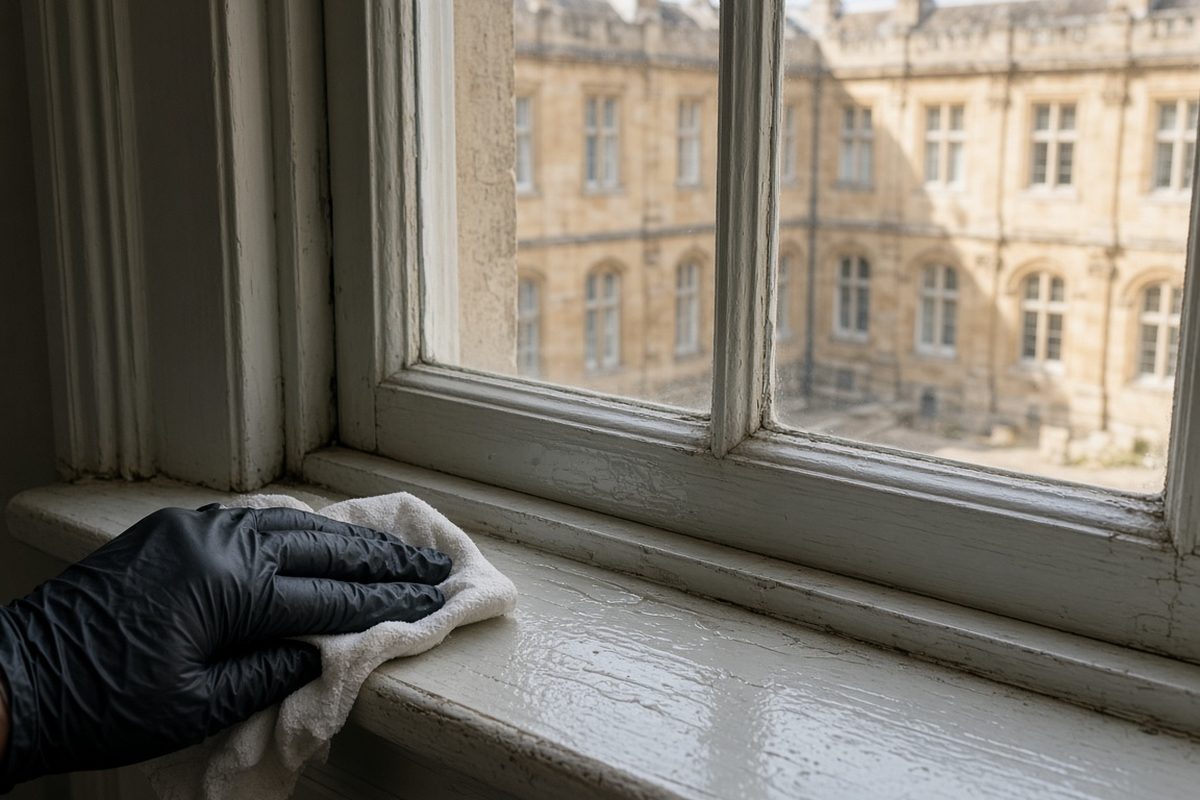
Clean glass is only part of a clean window. Inventory clerks also look at the frames, sills, tracks, seals, handles and hinges, and these are where dirt, dead insects, condensation marks and black spotting build up. Oxford has a wide mix of windows, from Victorian timber sashes in Jericho and North Oxford to uPVC casements in Cowley and Headington and aluminium sliders in newer flats. This guide explains how to clean each part of a window, how to deal with different window types and how to stay safe.
What Clerks Look At
At check-out, a clerk will usually check:
- Glass inside, and outside where it can be safely reached
- Frames, including the top edge
- Internal sills
- Tracks and channels
- Seals and gaskets
- Handles, locks and hinges
- Trickle vents
- Curtain rails, poles and blinds
- Reveals (the side walls of the window opening)
What You Need
- Vacuum with a crevice tool and brush attachment
- Microfibre cloths
- Warm water and washing-up liquid
- Glass cleaner
- A squeegee
- Old toothbrush or detailing brush
- Cotton buds
- A suitable product for black spotting
- A step stool
The Order to Work In
- Vacuum tracks, sills and frames
- Clean frames and sills
- Clean tracks and seals
- Clean handles and hinges
- Clean the glass last
Cleaning the glass last means any splashes from the frames are removed.
Vacuum First
Dead insects, dust, grit and leaves collect in tracks, on sills and in the corners of frames. Vacuum them out with a crevice tool before using any water. Wet dust turns to mud, which is harder to remove.
uPVC Frames and Sills
uPVC is the most common window type in rentals.
- Wipe frames and sills with warm water and washing-up liquid.
- Pay attention to the top of the frame and the corners.
- For stubborn marks, use a uPVC cleaner or a mild cream cleaner, tested first.
- Rinse and dry.
Avoid solvents, bleach on coloured frames and abrasive pads, which can roughen or discolour uPVC.
Timber Sash Windows
Sash windows are common in Oxford's period homes. They need gentle treatment:
- Vacuum the channels where the sashes slide, the sill and the top of the lower sash.
- Wipe painted frames with a barely damp cloth and mild soapy water.
- Do not soak the timber, especially at joints and the bottom rail.
- Dry thoroughly.
- Clean the sash lifts, locks and catches with a dry or barely damp cloth.
Do not force stiff sashes, remove beads or adjust cords. If a sash is stuck or a cord is broken, report it to the landlord. Our guide to cleaning listed buildings has more on period windows.
Timber Casement Windows
Painted or stained timber casements are cleaned like sashes: vacuum, wipe with a barely damp soapy cloth and dry. Check the bottom rail for flaking paint or soft timber, which should be reported.
Aluminium Windows and Sliding Doors
Aluminium frames are common in newer flats and balcony doors.
- Vacuum the tracks thoroughly, as grit can damage the rollers.
- Wipe the frames with warm soapy water.
- Clean drainage holes in the bottom track with a cotton bud or pipe cleaner, so water can drain.
- Dry the frames.
Do not use abrasive products on powder-coated or anodised aluminium.
Tracks and Channels
Tracks on sliding windows and doors collect a surprising amount of dirt.
- Vacuum.
- Brush loose dirt with an old toothbrush.
- Wipe with a cloth and warm soapy water. Wrap the cloth around a flat tool, such as a butter knife, for narrow tracks.
- Use cotton buds for corners.
- Dry.
Seals and Gaskets
Rubber seals around the glass often have black spotting from condensation.
- Wipe gently with a soft cloth or cotton bud and warm soapy water.
- For black spotting, use a suitable product on a cotton bud, following the label.
- Rinse and dry.
- Do not pull or scrub seals, which can damage them.
Deep staining in seals may not come out. If it was there at check-in, it should be on the inventory. See our guide to condensation and black spots on windows.
Handles, Locks and Hinges
Wipe handles and locks with a damp cloth. Dust hinges and wipe them gently. Do not oil hinges or locks unless the landlord asks; excess oil attracts dirt. If a handle is loose or a lock does not work, report it.
Trickle Vents
Trickle vents are small vents at the top of many modern windows. They collect dust and insects.
- Vacuum with a brush attachment
- Wipe with a barely damp cloth
- Leave them open after cleaning, as they help reduce condensation
The Glass
- Wipe off loose dust.
- Spray glass cleaner or use warm water with a few drops of washing-up liquid.
- Wipe with a microfibre cloth, or use a squeegee from top to bottom, wiping the blade after each stroke.
- Buff any streaks with a dry microfibre cloth.
- Clean the corners and edges with a cloth wrapped around a finger.
Avoid cleaning glass in direct sunlight, which dries the cleaner too quickly and leaves streaks.
Outside Glass
Only clean the outside of windows you can reach safely from the ground or from inside. Many modern uPVC windows have hinges that allow the outside pane to be reached from inside. Some sash windows can be tilted. Never lean out of a window or stand on a sill.
Upper-floor external windows are often a matter for the landlord or a professional window cleaner. Check your tenancy agreement.
Reveals and Sills
Window reveals, the side walls of the window opening, are often painted plaster. Dust them and spot-clean gently. Internal sills may be timber, uPVC, tiles, marble or stone. Clean each with a suitable product. Stone and marble sills should not be cleaned with acids.
Curtain Rails, Poles and Blinds
Dust curtain rails and poles. Wipe blinds slat by slat, or vacuum with a brush attachment. Check blinds for black spotting near the glass. See our guide to furnished lets: cleaning furniture for curtains.
Roof Windows
Roof windows in loft rooms are covered in our guide to cleaning loft rooms and eaves storage.
Safety
- Use a stable step stool
- Do not lean out of windows
- Do not stand on sills, radiators or furniture
- Close windows securely when finished
- Keep children away from open windows
How Long It Takes
Cleaning all the windows inside a two-bedroom flat, including frames, sills and tracks, typically takes one to two hours. Sash windows and windows with a lot of black spotting take longer.
Professional Help
Our end of tenancy window cleaning service covers glass inside, frames, sills, tracks and seals, and external glass where it can be safely reached. It is included in our full end of tenancy clean. See our end of tenancy cleaning checklist.
Window Types in Oxford Homes
Knowing what kind of windows you have helps you plan:
- Victorian and Edwardian sashes in Jericho, North Oxford, Grandpont, St Clement's and the city centre. Often single-glazed, painted timber, with channels, sash lifts and catches. Prone to condensation and dust in the channels.
- Replacement uPVC casements in many terraces and 1930s semis across Cowley, Headington, Marston and Botley. Easy to clean, but seals and trickle vents collect dirt and black spotting.
- Tilt-and-turn windows in newer flats and some refurbishments. The inner tilt mode makes the outside glass easy to reach from inside.
- Aluminium sliders and balcony doors in new-build flats. Tracks fill with grit and need regular vacuuming.
- Leaded lights and secondary glazing in some period and listed properties. Leaded panes need gentle cleaning; secondary glazing panels often lift out or slide, and both sides of each pane need cleaning.
Secondary Glazing
Secondary glazing, an inner panel fitted inside an existing window, is common in listed buildings and conservation areas where the original windows cannot be replaced. It means there are four glass surfaces to clean instead of two, plus the tracks of the secondary unit. Dust and dead insects often collect in the gap between the two windows. If the panels slide or lift out, clean all four surfaces and the gap. If they are fixed, clean the surfaces you can reach and tell the agent if the gap is dirty and inaccessible.
Condensation in Winter
In winter, many Oxford windows run with condensation every morning. Water collects on sills and the bottom of frames, where it can leave tide marks and black spotting. Wiping windows each morning, opening them briefly and keeping trickle vents open all help. Before check-out, pay particular attention to the bottom rail, the sill and the seals.
Frequently Asked Questions
Do I need to clean the outside of the windows?
Usually only those you can reach safely. Upper-floor external windows are often the landlord's responsibility. Check your tenancy agreement.
How do I clean sliding window tracks?
Vacuum first, then brush, then wipe with a cloth wrapped around a flat tool. Clear drainage holes with a cotton bud.
Can I use bleach on window seals?
Only a product that is suitable for the seal and following the label. Bleach can damage some rubbers and discolour coloured frames.
How do I stop streaks on glass?
Use a squeegee, wipe the blade after each stroke and buff with a dry microfibre cloth. Avoid cleaning in direct sunlight.
Do you clean sash windows?
Yes. We clean sash windows inside, including channels and sills, and external glass where it can be reached safely.