
Tenant Rights and Cleaning Deductions: What Renters in Oxford Need to Know
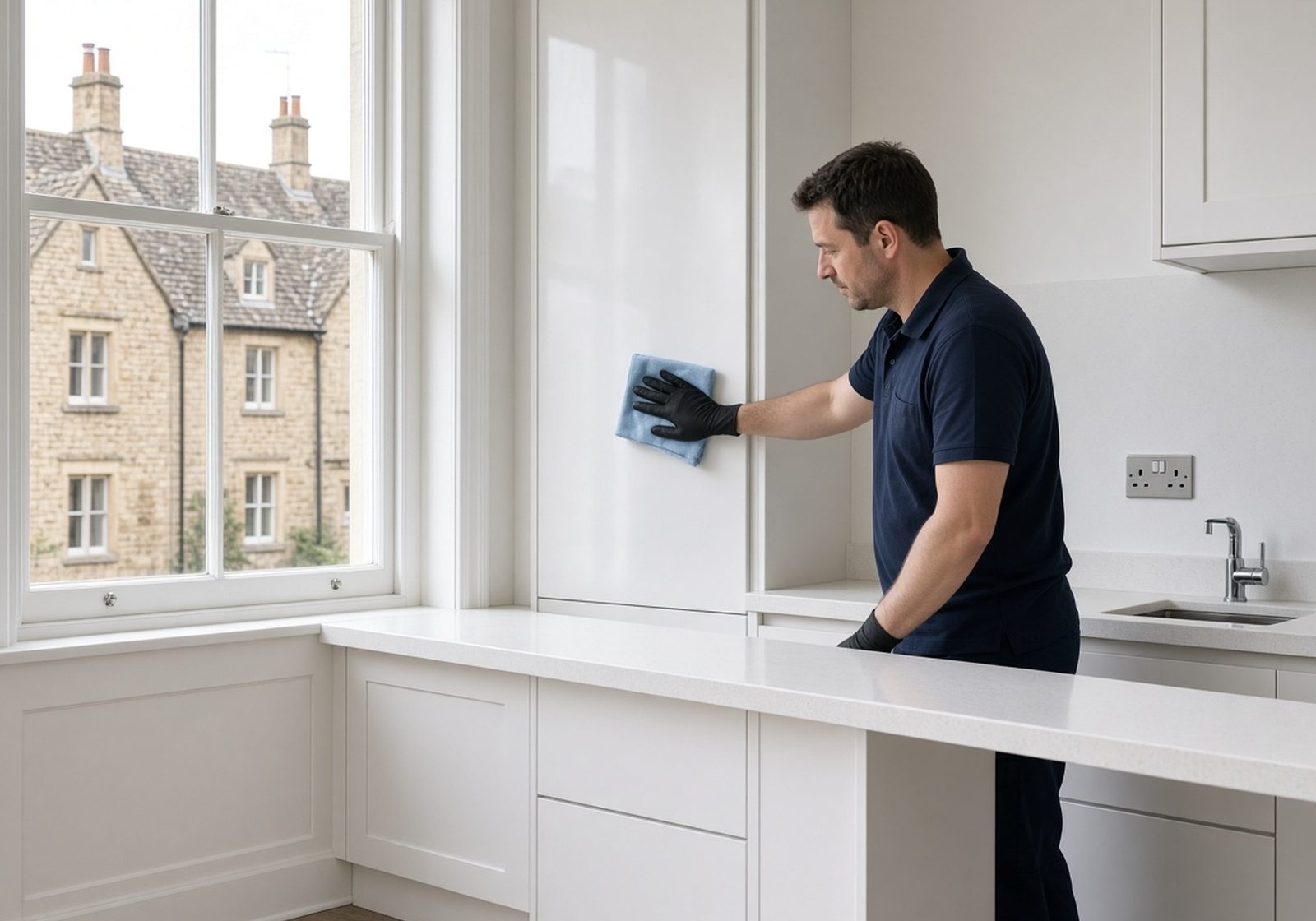
When your tenancy ends, you want your deposit back in full. But cleaning deductions are the most common reason deposits are reduced, and many tenants are unsure what their landlord can and cannot charge for. This guide explains your rights as a tenant in England when it comes to cleaning: what the law says, what counts as fair wear and tear, what a reasonable charge looks like, the evidence your landlord needs and how to challenge a deduction you think is unfair. It is written for tenants in Oxford, but the rules apply across England.
Your Basic Rights
If you rent from a private landlord in England on an assured tenancy, which covers most private renters (most became assured periodic tenancies on 1 May 2026 under the Renters' Rights Act), you have important rights around your deposit:
- Your deposit must be protected in a government-approved scheme within 30 days, and you must be given information about where it is held
- You must be told what deductions your landlord wants to make
- You can challenge deductions you disagree with, using the scheme's free dispute service
- You cannot be charged for fair wear and tear
- You cannot be required to pay for a professional clean as a condition of your tenancy
The GOV.UK tenancy deposit protection pages and the private renting guide set out these rights.
What Your Landlord Can Charge For
Your landlord can make a reasonable claim from your deposit for:
- Cleaning needed to return the property to the standard at check-in
- Damage beyond fair wear and tear
- Missing items listed in the inventory
- Unpaid rent or other sums due under the tenancy
- Removal of items you left behind
For cleaning, the key comparison is between the condition at check-in and at check-out. If the property was clean at the start and dirty at the end, a cleaning charge may be justified.
What Counts as Fair Wear and Tear?
Fair wear and tear means the natural deterioration of a property and its contents through normal, reasonable use over time. It depends on:
- The length of the tenancy: more wear is expected after five years than after one
- The number of occupants: a family or a shared house will cause more wear than a single person
- The age and quality of items at the start
- The type of use that could reasonably be expected
Examples of wear and tear:
- Carpets flattened or slightly worn in walkways
- Minor scuffs on walls and paintwork from furniture and daily life
- Faded curtains or paintwork from sunlight
- Small marks on worktops from normal use
- Loose door handles or worn hinges
- Grout discoloured with age, despite cleaning
Cleaning is usually not wear and tear. Dirt, grease, dust and limescale can all be removed, so leaving them is not normal deterioration. That is why cleaning claims are so common.
The Tenant Fees Act 2019
The Tenant Fees Act bans most fees that landlords and letting agents in England can charge tenants. For cleaning, it means:
- You cannot be required to pay for a professional clean at the end of the tenancy
- You cannot be required to use a particular cleaning company
- A tenancy clause requiring professional cleaning is generally not binding
But the Act does not stop the landlord from claiming the reasonable cost of cleaning from your deposit if you leave the property less clean than at the start. See the government guidance for details.
What Is a "Reasonable" Charge?
Even when a cleaning charge is justified, it must be reasonable. That means:
- Linked to the actual cleaning needed, not a fixed fee
- Proportionate: a few missed cupboards do not justify a full professional clean
- Evidenced: ideally backed by an invoice or quote
- Not betterment: the landlord should not end up with a property cleaner than it was at check-in at your expense
If the check-in report says the property was "domestically clean", the landlord cannot charge you to have it "professionally cleaned".
The Evidence Your Landlord Needs
In a dispute, the landlord has to prove a deduction is justified. Adjudicators usually look for:
- A detailed check-in inventory, ideally signed or acknowledged by you
- A detailed check-out report, in the same format
- Clear, dated photos from both
- Invoices or quotes for the cleaning
- Any relevant correspondence
If there was no check-in inventory, or it is vague, it is much harder for the landlord to prove the property was cleaner at the start. Our guide to check-in vs check-out inventories explains why the check-in matters so much.
Your Evidence
You can strengthen your position by keeping:
- Your own check-in photos, taken on the day you moved in
- Comments on the check-in inventory, sent in writing within the time allowed
- Photos after your final clean, with dates
- Receipts for any professional cleaning, including the checklist
- Messages with the landlord or agent about repairs, damp or other issues
Common Disputed Items
The oven
Ovens are the most common cleaning deduction. If the oven was clean at check-in and greasy at check-out, a reasonable charge for cleaning it is likely to be upheld. If it was already dirty at the start, it should not be.
Limescale
Oxfordshire has hard water, so limescale builds up quickly. You are expected to keep it under control, but heavy, old scale that was there at check-in is not your responsibility.
Carpets
You can be charged for cleaning dirt and removable stains, but not for normal wear. If a carpet is damaged beyond cleaning, any claim for replacement should take its age into account. See our guide to carpet stains: clean or replace.
Walls
Small marks and scuffs are usually wear and tear. Large marks, writing, grease or damage from sticky tack may be chargeable. See our guide to cleaning walls and ceilings.
Black spotting and condensation
If black spotting is caused by how the home was used, such as not ventilating, a cleaning charge may be reasonable. If it is caused by a building problem you reported, it should not be charged to you.
Gardens
Your responsibilities depend on the tenancy agreement and the condition at check-in. You are usually expected to keep the garden reasonably tidy and remove rubbish.
How to Challenge a Deduction
- Ask for a breakdown of the deduction and the evidence
- Compare the check-in and check-out reports item by item
- Gather your own evidence
- Write to the landlord or agent, explaining clearly which items you dispute and why
- Raise a dispute with the deposit scheme if you cannot agree
The dispute service is free. Our guide to deposit disputes over cleaning explains the process step by step.
Where to Get Help
- Citizens Advice has free guidance on deposits
- Shelter offers advice on renting and repairs
- Your deposit scheme has guides for tenants on its website
- If you are a student, your university or college may have an accommodation or advice service
Shared Houses and HMOs
In a joint tenancy, you are all jointly responsible, and the deposit is usually held for all of you together. Deductions come from the whole deposit. It is up to you to agree how to share them. If one housemate leaves their room dirty, the others may still lose part of the deposit. Agree a cleaning plan before moving out. See our guide to student house check-out cleaning.
Tips to Protect Your Deposit
- Check the inventory carefully at check-in and add comments with photos
- Report repairs and damp promptly, in writing
- Clean regularly, especially the oven and bathroom
- Clean to the check-in standard before you leave, using a checklist
- Take dated photos after your final clean
- Attend the check-out if you can
- Keep receipts for professional cleaning
Our end of tenancy cleaning checklist and tenancy deposit cleaning rules pages summarise the key points.
Worked Examples
A few typical situations show how these rules work in practice:
The greasy oven. Priya rents a one-bedroom flat in Summertown for two years. The check-in report says the oven was "professionally cleaned", with photos. At check-out, the oven has baked-on grease. The landlord proposes the cost of a professional oven clean, with an invoice. This is likely to be upheld.
The limescale that was already there. Tom and four friends rent a house in Cowley. The check-in report says the shower head had "heavy limescale". At check-out it still has heavy limescale. The landlord proposes a charge for descaling. Because the scale was recorded at the start, the claim is weak.
The whole-house clean. Sam leaves a flat in Headington clean, except for two kitchen cupboards and a dusty wardrobe top. The landlord proposes the full cost of a professional end of tenancy clean. That is unlikely to be proportionate. A small charge for the missed items would be more reasonable.
The carpet after five years. A family leaves a house in Kidlington after five years. The hallway carpet is worn and has a small stain. The landlord proposes the full cost of a new carpet. Wear after five years is expected, and the stain may be cleanable. A replacement claim is likely to be reduced significantly.
The black spotting. A tenant in Jericho reported black spotting on a bedroom wall several times during the tenancy, and the landlord did not deal with the cause. At check-out the landlord proposes a cleaning charge for the spotting. Because the tenant reported it and the cause was not addressed, the claim is weak.
Timescales to Know
Once you and your landlord agree how much of the deposit should be returned, it should be paid within 10 days. If you cannot agree, the disputed amount is held by the scheme until the dispute is resolved. Each scheme has a time limit for raising a dispute after the tenancy ends, so do not delay if you disagree with a deduction.
Frequently Asked Questions
Can my landlord charge me for a professional clean?
Only the reasonable cost of the cleaning needed to return the property to its check-in standard. A fixed professional cleaning fee is generally banned under the Tenant Fees Act.
What if my landlord did not protect my deposit?
You may be able to claim compensation through the courts. Citizens Advice and Shelter can help.
Can I be charged for cleaning if I left the property cleaner than I found it?
No. You only need to return it to the condition at check-in, allowing for wear and tear.
How long does my landlord have to propose deductions?
There is no single fixed deadline, but deposit schemes have time limits for raising disputes. Ask your landlord for their proposal promptly after you leave.
Do I need to have the carpets professionally cleaned?
Not as a condition of the tenancy. You must return them clean, to the standard at check-in, allowing for wear.