
Carpet Shampoo vs Hot Water Extraction: Which Method Gets Carpets Through Check-Out?
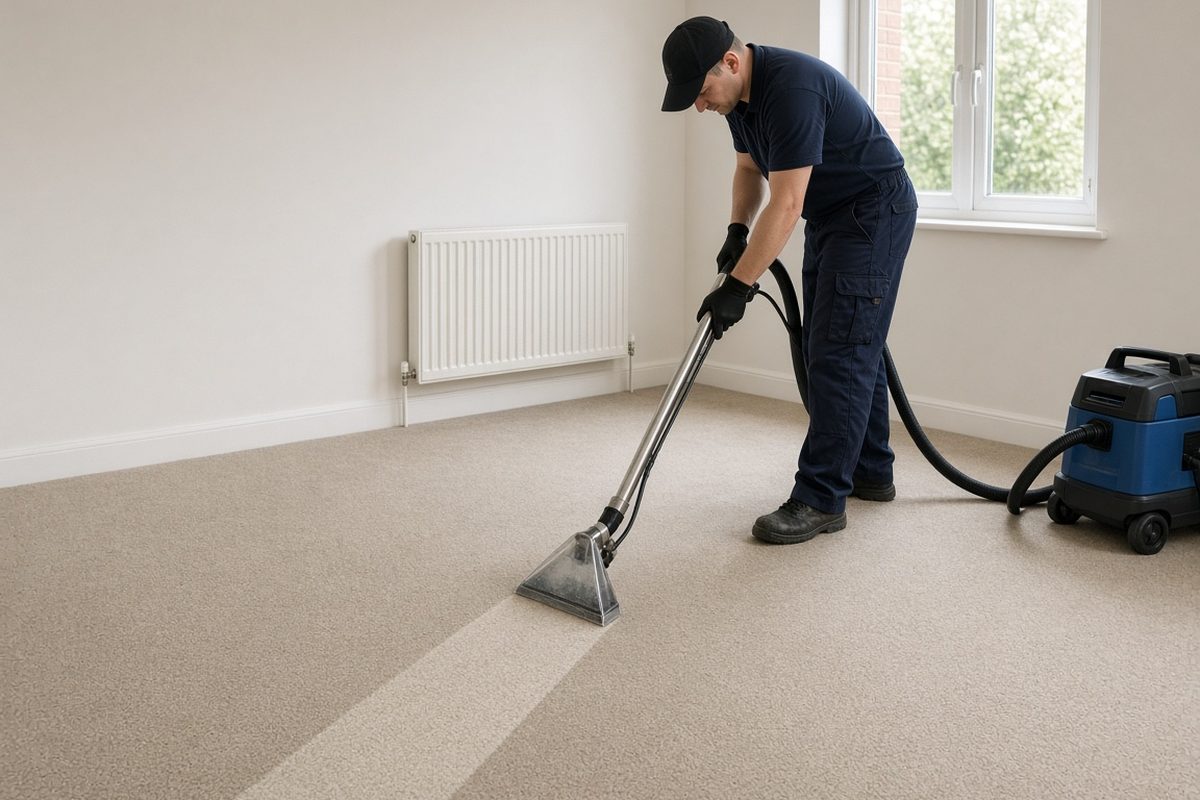
Carpets are one of the most common items in end of tenancy disputes. Many check-in reports state that carpets were "professionally cleaned", and tenancy agreements often ask for them to be returned in the same condition. That raises a practical question: what counts as professional cleaning, and which method should you use? The two terms people hear most are "shampooing" and "hot water extraction", often used interchangeably, but they are different processes with different results. This guide explains how each works, the pros and cons, and which is most likely to meet the standard at check-out.
What "Shampooing" Usually Means
Traditional carpet shampooing uses a rotary machine with a brush that works a foaming detergent into the carpet. The foam loosens dirt, which is then left to dry and vacuumed away, or partly extracted.
The term is also used loosely for any wet carpet cleaning, including domestic carpet washers sold or hired in supermarkets. Those machines spray a detergent solution and suck some of it back up.
Pros of shampooing
- Good agitation, which loosens surface dirt
- Relatively cheap equipment
- Domestic versions are easy to hire
Cons of shampooing
- Detergent residue can be left in the carpet
- Residue is sticky, so carpets re-soil quickly
- Domestic machines have weak suction, leaving carpets wet
- Over-wetting can cause shrinkage, odours and longer drying
- Does not always reach deep into the pile
What Hot Water Extraction Is
Hot water extraction, often called "steam cleaning" even though it does not use steam, is the method most professional carpet cleaners use. It is also the method many carpet manufacturers recommend for periodic deep cleaning.
The process usually has four stages:
- Vacuuming to remove loose dirt and grit
- Pre-spray with a cleaning solution suited to the fibre and soiling, left to dwell
- Extraction, where hot water or a rinse is injected into the pile under pressure and immediately extracted with powerful suction
- Grooming, where the pile is brushed to help it dry evenly
Professional machines have much stronger suction than domestic carpet washers, so more of the water and dirt comes out, and the carpet dries faster.
Pros of hot water extraction
- Removes more embedded dirt
- Leaves little or no residue when a proper rinse is used
- Drier results with professional suction
- Recommended by many carpet manufacturers
- Usually what check-in reports mean by "professionally cleaned"
Cons of hot water extraction
- Carpets are still damp for a few hours
- Not suitable for all fibres, such as some wool or natural fibres, without care
- Professional equipment is expensive to buy
Dry and Low-Water Methods
There are also low-water methods, including:
- Encapsulation: a polymer cleaning solution is worked into the carpet, dries to crystals that trap dirt, and is vacuumed away
- Bonnet cleaning: a rotary machine with an absorbent pad buffs the surface
- Dry compound: a damp powder is brushed in and vacuumed out
These are useful for commercial carpets and for quick maintenance, and dry quickly. But they mainly clean the top of the pile, so they may not lift deep soiling or stains as well as hot water extraction.
Which One Meets "Professionally Cleaned"?
There is no legal definition of "professionally cleaned". In practice, agents and inventory clerks usually mean the carpets were cleaned by a professional carpet cleaning company, and they look at the result: are the carpets free of stains, traffic lanes and soiling compared with check-in?
Hot water extraction by a professional is the most widely accepted method. A receipt from a professional company gives you evidence that you have met the standard. A hired machine may give good results on a lightly soiled carpet, but if the result is patchy or the carpet is left damp and smelling, it may not satisfy the clerk.
Remember the legal position: you cannot be required to use a particular company or pay for a professional clean as a condition of the tenancy, but you must return the carpets in the same condition of cleanliness as at the start, allowing for fair wear and tear.
Stains and What Comes Out
Neither method can remove every stain. Results depend on what the stain is, how long it has been there and whether anyone has already tried to remove it with the wrong product.
| Stain | Typical result with professional extraction |
|---|---|
| Mud and general soiling | Usually removed |
| Coffee and tea | Often removed or greatly reduced |
| Red wine | Often reduced; old stains can remain |
| Grease and oil | Usually reduced with pre-spray |
| Pet urine | Can be reduced; odour may need treatment |
| Bleach marks | Permanent: colour has been removed |
| Burns | Permanent damage |
| Hair dye, ink, nail varnish | Often permanent |
Our guide to stain removal and our guide to carpet stains: clean or replace go into more detail.
Drying Times
After hot water extraction by a professional, carpets usually dry in four to eight hours, depending on the carpet, the weather and ventilation. After a domestic machine, they can take much longer.
To help carpets dry:
- Open windows if the weather allows
- Keep the heating on low in winter
- Avoid walking on them until dry
- Do not put furniture back until dry, or use protective pads
If the check-out is first thing in the morning, carpet cleaning is best done the day before. A damp carpet at check-out is not necessarily a problem, but it can make it harder for the clerk to judge the result.
Wool, Natural Fibres and Delicate Carpets
Wool carpets, common in higher-value lets in North Oxford and Summertown, need lower temperatures and wool-safe products to avoid shrinkage and colour loss. Natural fibres like sisal, seagrass and jute are easily damaged by water and are usually dry-cleaned.
Always check the carpet type before cleaning. A professional cleaner will test a hidden area first.
Rugs
Loose rugs belonging to the landlord should be cleaned if they are on the inventory. Many rugs can be cleaned in place with hot water extraction, but valuable or delicate rugs may need specialist cleaning off site.
Stairs and Landings
Stairs and landings take the most wear in any house, especially shared houses. They are harder to clean because of the edges and risers. Professional cleaners use a smaller hand tool to clean each step. In student houses in Cowley, Headington and East Oxford, stairs are often the most heavily soiled carpets in the property.
Cost Comparison
Hiring a domestic carpet washer and buying solution is cheaper for a single room. For a whole house, the cost difference narrows, and professional cleaning is faster and usually gives a better result. Our price guide gives indicative ranges for carpet cleaning per room and per property.
Using a Hired Machine Well
If you decide to hire a domestic carpet washer, you can get much better results by following a few rules:
- Vacuum thoroughly first, slowly and in two directions. Wet cleaning grit and hair only turns them into mud.
- Read the carpet label or ask the landlord about the fibre. Wool and natural fibres need different treatment.
- Pre-treat stains with a suitable spotter, following the label, and blot rather than rub.
- Use less detergent than you think. Too much leaves a sticky residue that attracts dirt.
- Do slow, overlapping passes, with more dry passes (suction only) than wet passes, to take out as much water as possible.
- Rinse with clean water in a final pass if the machine allows it.
- Ventilate the room and keep the heating on low until the carpet is dry.
- Groom the pile with a soft brush so it dries evenly.
The most common mistakes are over-wetting, using too much shampoo and not vacuuming first. Over-wetting can soak the underlay, which then smells and can cause brown marks to wick up as the carpet dries.
Underlay and Smells
Sometimes a carpet looks clean on the surface but smells, especially after a spill or a pet accident. Usually the liquid has soaked through to the underlay. Surface cleaning alone will not fix this. A professional cleaner can treat the area with an enzyme product and extract from deeper, but in severe cases the underlay may need replacing, which is a repair rather than cleaning.
If you notice a smell well before check-out, deal with it early. Our guide to getting rid of smells before moving out has more advice.
What to Ask a Carpet Cleaner
Before booking, ask:
- Which method do you use, and is it hot water extraction?
- Do you pre-vacuum and pre-treat stains?
- Do you rinse to avoid residue?
- How long will the carpets take to dry?
- Do you clean stairs and landings, and is that priced separately?
- Will I get an invoice and photos for my agent?
- What happens if the agent says the carpets are not clean?
We offer a 72-hour re-clean promise for items on our checklist.
Which Should You Choose?
As a simple guide:
- Lightly soiled carpets, inventory says "clean": thorough vacuuming, perhaps with spot cleaning, may be enough
- Lightly soiled, inventory says "professionally cleaned": professional hot water extraction is safest
- Stains or traffic lanes: professional hot water extraction, with stain treatment
- Wool or natural fibres: professional cleaning with the right method for the fibre
Frequently Asked Questions
Is "steam cleaning" the same as hot water extraction?
Usually, yes. Most carpet "steam cleaning" is actually hot water extraction. True steam is rarely used on carpets.
Will a hired carpet cleaner be accepted at check-out?
It depends on the result and on what your inventory says. If the carpets look as clean as at check-in, a hired machine may be fine. If the inventory says "professionally cleaned", a professional clean with a receipt is safer.
How long should I wait before walking on cleaned carpets?
Ideally until they are dry, usually four to eight hours after professional extraction. If you must walk on them, wear clean socks or shoe covers.
Can carpet cleaning remove pet odours?
Often, with the right pre-treatment and extraction. Strong urine odours that have reached the underlay may not be fully removed.
Do I need to move furniture before carpet cleaning?
In an end of tenancy clean, the property is usually empty. If furniture remains, cleaners can clean around it or move light items. Heavy items may need to stay.